
Sketch Before You Build: Website Wireframes for Cyprus Owners
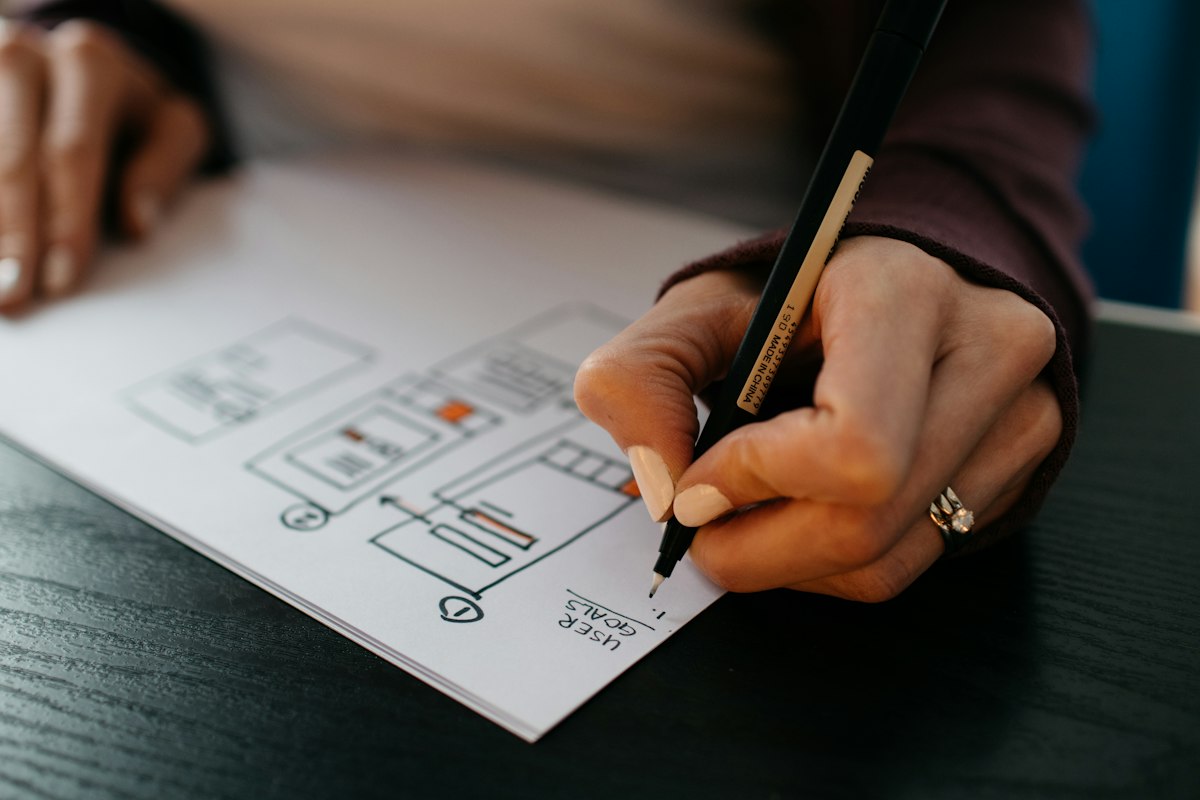
Most website projects in Cyprus start the same way: "we need a new site", a call to a designer, and three weeks later a colourful mock-up arrives. Then the arguments begin. The owner wants the phone number bigger, the designer defends the layout, and nobody asks the only question that matters: what is this page supposed to make a customer do? A wireframe settles that question for the price of a pencil.
What a wireframe is
A wireframe is a rough sketch of a page. Boxes stand for photos, lines stand for text, a rectangle stands for the button. No colours, no fonts, no logo. It shows what goes on the page and in what order, and nothing else. A homepage wireframe takes ten minutes on a sheet of A4 or a tablet, and that is the point: it is cheap enough to throw away, so you can try three versions before anyone writes a line of code.
Why jumping straight to design costs more
Changing a sketch costs a rubber. The same change in a finished design costs a designer's afternoon. After the developer has built it, a day. After launch, a redesign. By the time most owners see their site, too much has been spent to argue, so they approve something pretty but wrong.
A finished design is also persuasive in a way that hides problems. Colours and photos distract from the question "does this page answer what a customer came for?" A grey box on paper cannot distract anyone, so the weak spots show.
Start with the question, not the page
Before you draw anything, write one sentence for each page: who arrives here, and what should they do next. A homeowner in Limassol searching for an electrician wants to know that you cover their area, that you are licensed, and how to call you. Someone on your services page wants a price range and what it includes. Once those sentences exist, the boxes almost draw themselves. The top of the screen holds the answer to the first question and the button for the next step. Everything else goes lower down.
How to sketch a page in ten minutes
- Draw a tall rectangle the shape of a phone screen, not a laptop. Most of your visitors arrive on a phone, so plan for the small screen first.
- Fill the top with a headline (what you do and where), one photo box, and one button: call, book, or WhatsApp.
- Below that, follow the order a customer asks questions: proof (reviews, photos of your work, logos), then the offer, then the practical facts such as hours, areas covered and parking, then the button again.
- Write real words where they matter. The headline and the button label should be the actual text; everywhere else, "text" is fine. Our guide to what a homepage should say helps with that first line.
- Number the boxes and note beside each where the content will come from: your own photos, your Google reviews, a paragraph you still have to write.
Repeat this for the three to five pages that do the work: home, your main services, about, and contact. The menu is a wireframe too. Write the items on one line and ask whether a stranger would understand every word.
Test it on a stranger
Hand the sketch to someone who does not work for you, a customer or a relative, and ask three things: what does this business do, where, and what would you tap first? If they hesitate or point at the wrong box, move things around and ask again. This five-minute test catches most of the problems that usually surface months after launch as "nobody fills in the form".
What to give your designer
Photograph your sketches and send them with the one-sentence goals and the content list. A good agency will be glad to receive them. They answer half the questions of a discovery call, and the design that comes back will be your plan in nice clothes rather than a surprise. It is also a fair test when you are choosing who to work with: an agency that ignores your sketches will ignore your feedback later.
If this is a redesign rather than a new site, sketch the new structure next to a list of your current pages so that your rankings survive the move. And do not expect the designer to copy your boxes exactly. A wireframe decides what goes where. The designer decides how it looks.
An hour that saves weeks
An hour with paper before a project replaces weeks of revisions after it, and it puts the owner, who knows the customers, in charge of what the site says. If you would like a second pair of eyes on your sketches before you commit to a build, send us a photo of them. We build websites from exactly this kind of plan, and the first conversation costs nothing.
- wireframes
- website planning
- ux
- web design
- cyprus
Want this handled for you?
DigitalMove builds premium websites, ships AI systems and consultation, and runs SEO that compounds for Cyprus businesses. Tell us about your project — we reply within one business day.